Some babies arrive with enough hair for a shampoo advert. Others spend months cultivating three very precious strands. Then the texture changes, a curl appears, and one day you wonder: is it time for a haircut?
A first haircut is a practical matter with a surprisingly emotional side. You are only trimming a fringe, but somehow your baby looks like a child afterwards. Here is how to approach it without turning the salon into a battleground.
When should you cut a baby’s hair?
There is no universal birthday at which the scissors must come out. Hair grows at different rates, and babies’ hair can change as they grow. A child with a thick fringe may need a trim long before a child with very little hair.
Family traditions sometimes set the timing. Some families mark the first haircut with a religious or cultural celebration; others simply wait until hair becomes awkward to manage. If you have no particular tradition to follow, comfort is a perfectly good guide.
Is the fringe constantly falling into their eyes? Are tangles making everyday brushing uncomfortable? Would a small trim make washing and drying easier? These are more useful questions than whether another child of the same age has already been to the hairdresser.
Why cut it—and how much?
A haircut does not have to mean a completely new look. You can ask for a fringe trim or a little off the ends. Explain what matters to you before the appointment begins, especially if you want to keep curls or length.
Long hair is not reserved for girls, and short hair is not compulsory for boys. The point is to find something comfortable for your child and manageable in your family. Other people’s opinions about what a boy or girl should look like need not dictate the appointment.
For tangles, take your time with gentle brushing rather than pulling harder. Cutting everything short is not the only option. Nor does cutting hair make its roots grow thicker: the freshly cut ends can simply look different.
Choose a welcoming hairdresser
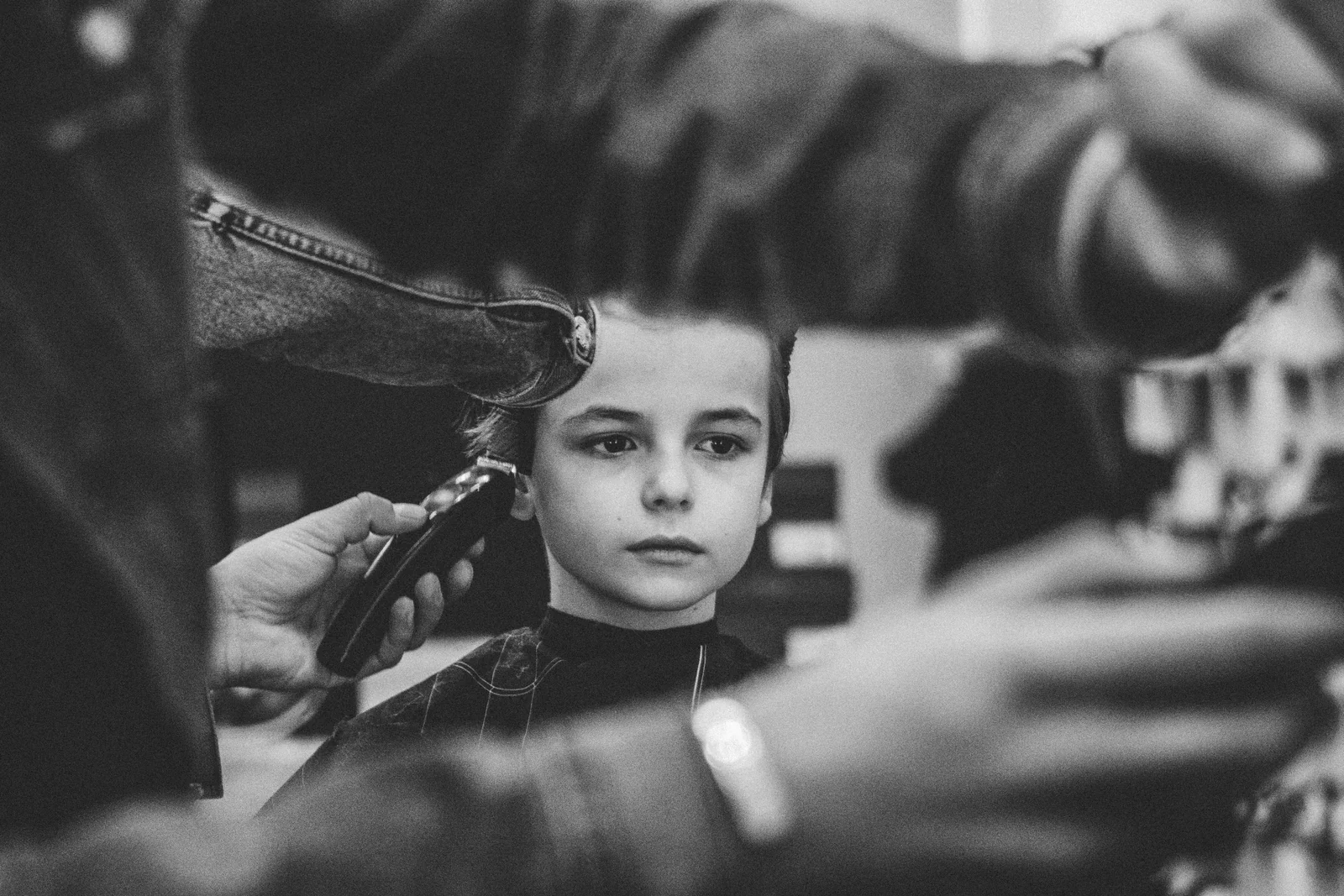
For the French original, Le Paternel spoke to Khaled at ZOUAK Artisan Coiffeur in Paris. The useful question is whether a salon is comfortable welcoming young children: do they have experience, a suitable seat, and time to let a nervous newcomer settle in?
Ask beforehand how they handle a first visit. Tell them your child’s age and anything they find difficult, such as loud noises or having their head touched. A patient response matters more than an elaborate children’s corner.
Prepare your child, not a military operation
Explain in simple words what will happen. You can pretend to cut a toy’s hair, look at the salon together or let your child watch someone else’s haircut. Choose a time when they are usually rested, and allow a little time to get used to the place.
Some children feel safer on a parent’s lap. A familiar toy can help. Ask the hairdresser to introduce the spray bottle, dryer or clippers before using them; a noise that seems ordinary to you can be startling at close range.
Your own calm helps, but a crying child is not evidence that you have prepared badly. If they are too upset to sit safely, stop and try another day. Finishing a fringe is not worth forcing a frightening experience.
A small family milestone
You may want to keep a lock of hair or take a picture. Or you may simply be pleased that shampooing is easier. Both reactions are allowed.
A familiar routine can make later visits easier: the same hairdresser, followed by a trip to the park or a story together. The haircut can become an ordinary, reassuring part of family life—even if you still privately mourn that first curl.